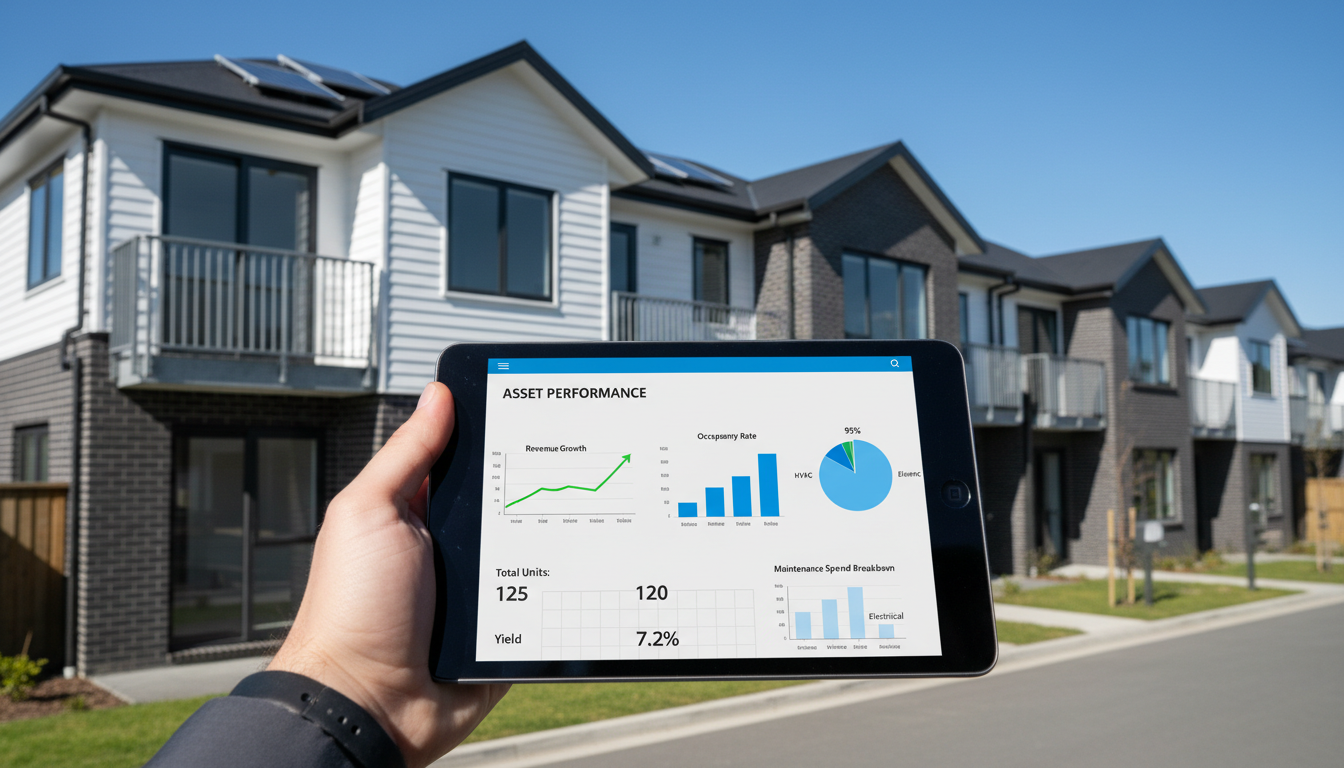
Most property managers rely on personality and experience. We rely on systems. Here’s how we manage your asset, and why it’s different from everyone else.
What Does a Property Manager Actually Do in Auckland?
A property manager handles everything between you and your tenant: rent collection, maintenance coordination, compliance tracking, inspections, and tenancy administration. At Venko Property, we go further. We apply documented systems, a live Risk Register, and a 10-year Capital Expenditure plan to every property we manage, so nothing gets missed and nothing surprises you.
No fluff. No vague promises
We built Venko on a simple idea: the same risk management and project delivery systems used to build bridges and manage infrastructure can, and should, be applied to residential property portfolios. This page explains exactly how we do that.
Our Operating Philosophy: Systems Over Memory
In commercial infrastructure projects, we don’t rely on individual knowledge. We document processes so that work continues consistently regardless of who’s on duty.
People get sick. People leave companies. People forget to follow up on maintenance requests. But documented systems don’t.
If your property management relies on one person being good at their job, you’re exposed to unnecessary risk. We’ve designed our operations so that every process is documented, tracked, and repeatable – not dependent on someone having a good day or a clear memory.
This isn’t about removing the human element. It’s about ensuring the human element delivers consistent results every time.
Managing the Risks on Your Property
The Risk Register
In commercial project management, every site has a Risk Register. It’s a live document that tracks every potential hazard, compliance deadline, and liability exposure. Standard property managers do “inspections.” We do Risk Audits.
You receive a quarterly “Traffic Light Report” showing your property’s status:
Green: Fully compliant, no action needed
Amber: Action required within 90 days
Red: Immediate attention required
Why This Matters
Most landlords discover compliance issues when: – A tenant complains to the Tenancy Tribunal – An insurance claim gets denied – A routine inspection becomes a $4,000 fine The Risk Register prevents surprises. You always know where you stand.
What’s in Your Risk Register?
When we onboard your property, we create a comprehensive Risk Register covering:
Healthy Homes Compliance
Expiry dates for insulation, heating, ventilation, draught-stopping, moisture ingress
Hot water cylinder age and expected replacement year
Roof condition and forecast replacement timeline
Heat pump/air conditioning service due dates
Real-Time Maintenance & Issue Tracking
Real-Time Maintenance Tracking
Most property managers rely on email threads and mental notes from phone calls. We use a portal & ticketing system, similar technology used by IT help desks and customer service teams, to track all interactions submitted via the portal system.
How It Works
Issue Reported
A tenant reports a dripping tap via the tenant portal, email, or phone.
Automatic ticket created: #VKO-2847
You get a notification: “New maintenance request logged”
Triage & Assessment
Emergency (24-hour response): Flooding, no hot water, security breach
Urgent (48-hour response): Heating failure in winter, major leak
Standard (5-day response): Minor repairs, non-urgent maintenance
Quote & Approval
We contact our vetted trade network and get quotes.
Quote attached to ticket #VKO-2847
Photo of the issue uploaded
You get notification: “Quote ready for approval: $285 + GST”
If under $500: We approve on your behalf (per your agreement).
If over $500: You “Approve” or “Reject”.
Work Scheduled
Tenant is notified and Trade confirms date & time.
Trade books in, completes work, sends invoice.
Invoice attached to ticket
Before/after photos uploaded
You get notification: “Work completed. Invoice: $285 + GST”
Closed & Archived
Ticket closed. All documentation stored permanently.
Searchable by property, tenant, trade, date, or issue type
Full audit trail for insurance or disputes
What You See
You have 24/7 access to the owner portal where you can: – View all open tickets in real-time – See photos and quotes before approval – Track resolution progress – Review complete ticket history – Search past issues by keyword
The Result
The #1 complaint we hear from investors switching to Venko: “My old property manager never kept me updated.”
With Venko, you don’t wait for updates, you see every main stage as it happens.
Average resolution time: 4.2 days from report to completion. Every ticket is time-stamped. You can see exactly how long things take.
10-Year Capital Expenditure Plan
In infrastructure projects, we don’t wait for a bridge to collapse. We forecast when the paint will fail, when the steel will corrode, and when the concrete will crack, then we budget for it years in advance.
What Is a CapEx Plan?
A Capital Expenditure (CapEx) Plan is a forecast of major, non-routine expenses over the life of an asset. Unlike OpEx (Operational Expenditure), which includes rent, rates, insurance, and minor maintenance; CapEx covers big-ticket items like:
Roof replacement
Exterior repaint
Hot water cylinder replacement
Heat pump replacement
Kitchen/bathroom renovation
Carpet replacement
Driveway resurfacing
Example: The $15,000 Surprise
Property purchased in 2020. Roof was installed in 2005 (15 years old at purchase). Expected lifespan is 25 years, so replacement needed around 2030.
Without planning: Landlord discovers leak in 2029, scrambles for $15,000.
With CapEx Plan: Landlord budgets $150/month for 10 years = $18,000 saved and ready.
Why This Matters
These costs are predictable. A roof lasts 20-30 years. A hot water cylinder lasts 10-12 years. Yet most landlords are “surprised” when they need replacing.
How We Build Your CapEx Plan
When we onboard your property, we conduct a CapEx Assessment:
Asset Audit
We document the age and condition of major items:
Roof (material, age, condition)
Hot water cylinder (brand, installation date, warranty expiry)
Heat pump/air conditioning
Exterior cladding and paint
Kitchen appliances (if provided)
Flooring and carpet
Lifespan Research
Using manufacturer data and industry standards, we estimate remaining useful life for each item.
Cost Forecasting
We research current replacement costs and apply inflation (3% annually) to forecast future expense.
10-Year Timeline
We create a year-by-year forecast showing when major expenses are likely.
Annual Review
Every year, we review the plan and adjust based on actual condition and market changes.
Sample CapEx Timeline
Year | Item | Estimated Cost 2026 | Heat pump service | $180 2027 | Hot water cylinder | $2,400 2029 | Exterior repaint | $8,500 2032 | Roof replacement | $16,000 2034 | Kitchen upgrade | $12,000
Why This Changes Everything
Cashflow Planning
You know what’s coming. You can budget monthly, adjust rent forecasts, or defer voluntary upgrades if cash is tight.
Smarter Tax Strategy
Your accountant can plan depreciation and deductibility years in advance. You can time major works for optimal tax years.
Protects Your Equity
Properties that fall into disrepair lose value fast. Regular planned maintenance preserves capital growth.
*Tax summary provides organised data for your accountant. We are neither tax advisors not financial advisors.