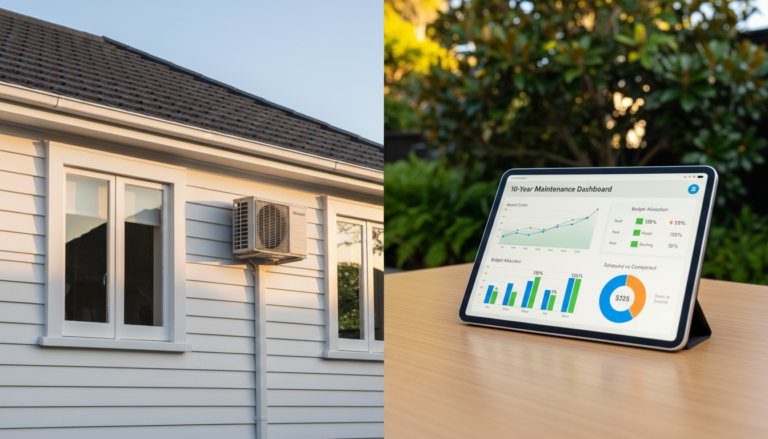
In the commercial infrastructure world, we know exactly when a bridge needs painting. We do not wait for it to rust. We schedule it 15 years in advance, budget for it, and execute on the plan.
In residential property, Auckland landlords treat a hot water cylinder failure like a natural disaster.
“Oh no! A $2,000 bill I didn’t expect!”
It should not be unexpected. A hot water cylinder lasts 10 to 15 years. A Colorsteel roof lasts 25 to 35 years. Exterior paint on a weatherboard house lasts 8 to 12 years. These are not variables. They are constants. And constants can be planned for.
The problem is not the cost. The problem is the surprise.
Why Does Reactive Maintenance Cost More Than Planned Maintenance?
Reactive maintenance, fixing things after they break, consistently costs more than planned replacement. Not by a small margin. Often by 30% to 50% more per job, once you account for emergency premiums, tenant disruption costs, and the downstream damage that a deferred small repair causes to adjacent components.
Here is what reactive maintenance actually costs across three common scenarios for Auckland landlords.
Hot water cylinder failure on a Friday evening. An unplanned emergency callout adds $300 to $400 to the job. Parts may not be available immediately, leaving the tenant without hot water for 36 to 48 hours. Under the Residential Tenancies Act, that timeline can trigger a compensation claim. A planned replacement, booked in advance during a routine inspection, costs $1,800 to $2,200 with no emergency loading and no tenant disruption.
Deferred gutter clearing leading to soffit damage. A blocked internal gutter costs $180 to clear on a planned cycle. Left uncleared, overflow directs water under the fascia. Gradual timber rot develops in the soffit and top plate. The structural repair costs $12,000 to $18,000, and as we cover in detail in our article on the Auckland Rental Risk Register, your insurer may decline the claim under the gradual damage clause if you cannot show a documented maintenance programme.
Deferred exterior paint on a weatherboard home. Paint on a weatherboard house is not cosmetic. It is the primary moisture barrier. When it blisters and cracks, water enters the timber. A planned repaint at Year 10 costs $8,000 to $12,000. A reactive repaint after moisture damage has entered the wall cavity includes timber repairs, mould remediation, and re-lining, often $25,000 to $40,000 on a full weatherboard home in Orewa or Silverdale.
The pattern is consistent. Small planned costs prevent large reactive ones. The question is not whether you will spend the money. It is whether you spend it on your terms or the property’s terms.
What Is a 10-Year CapEx Plan?
A Capital Expenditure (CapEx) plan is a forward schedule of every major component replacement your property will need over a defined period, with estimated costs and timing assigned to each item.
It treats your rental property the way a building manager treats a commercial asset: as something with known component lifespans that require scheduled intervention, not random attention when things fail.
The starting point is a property asset register: a complete inventory of every major building component, its estimated age, its expected economic lifespan, and its replacement cost. From that register, you build a year-by-year maintenance calendar.
A simplified example for a 3-bedroom weatherboard property on the Hibiscus Coast purchased in 2020:
Years 1 to 2: Establish baseline. Service heat pump. Clear gutters. Confirm smoke alarm compliance. Commission insulation assessment for Healthy Homes Standards.
Years 3 to 4: Exterior wash and paint touch-up. Carpet assessment. Bathroom resealing check. Appliance review.
Years 5 to 6: Midpoint review. Update asset register. Carpet replacement if on a 7-year cycle. Adjust sinking fund based on real cost data.
Years 7 to 8: Exterior repaint if on a 10-year cycle. Hot water cylinder replacement if approaching 15 years. Heat pump replacement if at end of useful life.
Years 9 to 10: Pre-decade planning. Roof condition assessment. Full property condition report. Adjust reserves for roof replacement cycle.
This is not a rigid script. Every property starts from a different baseline. What the plan gives you is a thinking framework: you are managing 10 years ahead, not reacting to the last crisis.
For the full room-by-room breakdown with detailed cost tables, component lifespans, and a year-by-year calendar, see our comprehensive guide: What Does a 10-Year Property Maintenance Plan Actually Look Like?
What Is a Sinking Fund and How Does It Work?
A sinking fund is a planning reserve. You calculate the likely 10-year capital expenditure total for your property, divide it across 120 months, and set aside that amount each month so the money exists when the bill arrives.
The formula is straightforward:
Monthly sinking fund contribution = Total 10-year CapEx estimate / 120
For a typical 3-bedroom Auckland rental with an estimated 10-year CapEx of $30,000 to $45,000, that works out to $250 to $375 per month, or roughly $58 to $87 per week.
On a weekly rent of $750, that is less than 12% of rental income building a reserve that eliminates financial surprises for the next decade.
Without a sinking fund, an $18,000 roof replacement arrives as an emergency. You redraw from the mortgage, drain savings, or defer it and watch the damage compound. With a sinking fund, it arrives as a scheduled line item with the money already allocated before the invoice lands.
A sinking fund does not have to be a separate bank account, though some landlords prefer that discipline. What matters is that the amount is mentally allocated before the bill, not scrambled for after it.
The Real Cost of “She’ll Be Right”
Most Auckland landlords who manage reactively do not think of themselves as taking a risk. They think of themselves as managing cashflow.
“I’ll fix it when it needs fixing.”
The problem is that by the time something visibly needs fixing, the cheapest window for intervention has already closed. The gutter needed clearing six months ago. The paint needed attention two years ago. The hot water cylinder gave its first signs of failure last winter when the pressure relief valve started weeping.
Reactive management does not save money. It defers costs and adds a premium to them when they eventually arrive, usually at the worst possible time and at the expense of the tenant relationship.
At Venko Property, every property we manage starts with a documented asset register and a working CapEx schedule. We track component ages, flag approaching replacement windows in your quarterly Risk Register report, and coordinate planned replacements before they become emergency callouts.
That is what transparent, no-markup maintenance coordination looks like in practice.
Stop Managing a Rental. Start Managing an Asset.
Ready to build a CapEx plan for your Auckland rental?
Start with our free Asset Performance Assessment, a free tool that scores your property across 11 key metrics including maintenance planning, net yield, and compliance readiness.
Or read the full implementation guide: What Does a 10-Year Property Maintenance Plan Actually Look Like? A Room-by-Room Guide for Auckland Landlords
This article provides general educational information about property maintenance planning. Cost estimates are indicative only and based on typical Auckland market conditions at the time of writing. Actual costs vary by property size, location, materials, and contractor. Always obtain quotes from qualified tradespeople for your specific property. This article is not professional financial, legal, or building advice.
Disclaimer
This article provides general educational information only and is not financial, tax, legal, or professional advice. Property management regulations, compliance requirements, and market conditions vary by location and change frequently.
Always consult qualified, licensed professionals (financial advisers, accountants, solicitors, or real estate agents) before making property investment or management decisions. Venko Property Limited is a residential property management company and does not provide licensed advisory services.
Examples and figures reflect general market conditions at the time of writing and may not apply to your specific situation.